
Community & Events
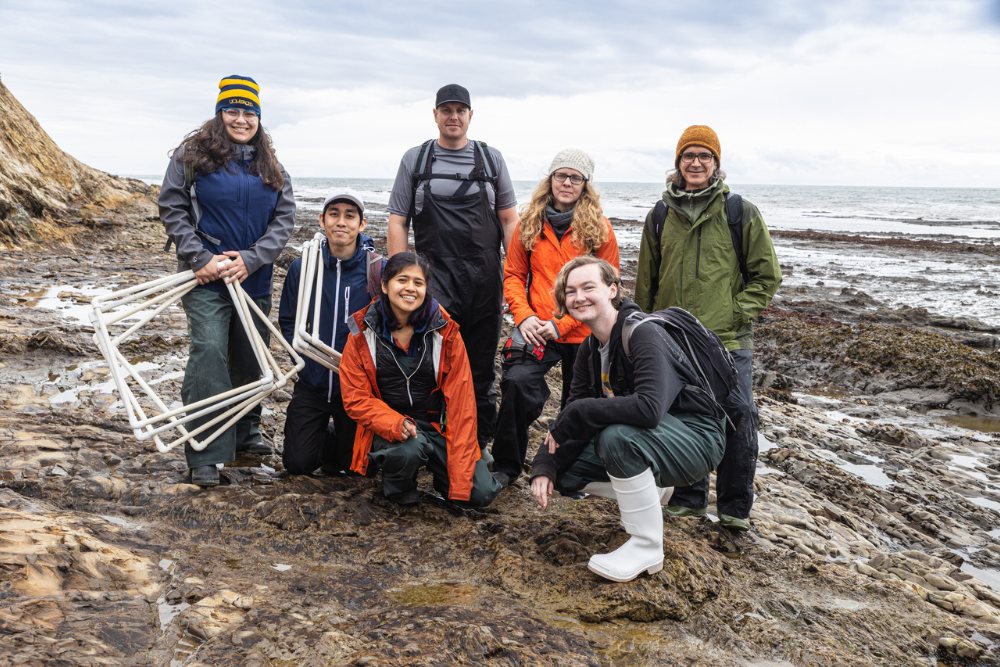
Students and researchers from Professor Michael Dawson’s lab during coastal field work.
LES builds community through regular events:
- LES Orientation Day for incoming students
- Annual Graduate Student Retreat at a UC Field Station
- Annual LES Department Scientific Retreat, with Second-Year Talks, lightning talks, and a poster session
- LES Seminar Series, featuring invited speakers, faculty, and Fourth-Year Talks, with students helping select speakers
- Trivia nights, coffee hours, networking lunches, a holiday party, and the end-of-year LES Lake Day barbecue
Inclusion & Recruitment
LES is committed to building a welcoming, supportive community. About half of current LES-advised graduate students are women, and about half are from historically marginalized groups. The faculty is gender balanced, and four faculty members came to UC Merced through the UC President's Postdoctoral Fellowship Program. LES recruits through partnerships with the McNair Scholars Program, UC LEADS, the Louis Stokes Alliance for Minority Participation, Hispanic-Serving and AANAPISI institutions, and SACNAS, and reviews applications holistically.
Teaching Opportunities
LES students build teaching and communication skills through teaching assistantships, LES 202, the program's required talks, and teacher-training workshops offered by UC Merced's Center for Engaged Teaching and Learning (CETL). LES coursework also addresses mentoring and the TA role.
Research Resources & Facilities
- UC Merced Library, with access to UC-wide collections (about 36 million volumes) and the California Digital Library
- Library GIS Center (workshops, consultations, spatial software) and Research Data Management services
- MERCED high-performance computing cluster (2,000+ cores, 18 TB RAM, GPU nodes), JupyterHub, and research data storage
- Shared departmental equipment and specialized instruments in faculty labs
- Yosemite Field Station, home of the graduate student retreat
- The Central Valley and Sierra Nevada as a natural laboratory for field research
Careers & Outcomes
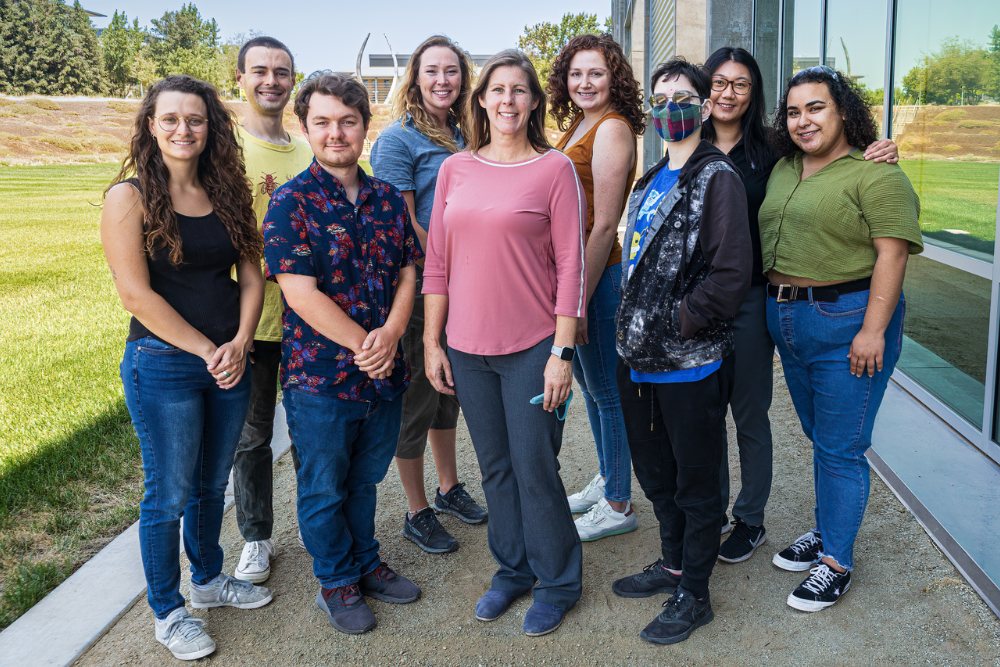
Members of Professor Rebecca Ryals’ lab.
LES graduates are prepared for careers in academia, government, industry, and nonprofit organizations, in areas such as climate adaptation, ecosystem restoration, and decision support for resource managers and policymakers. Nationally, about 40% of graduates of related programs go into higher education, and government, research, environmental services, and nonprofit management account for another 27% of first positions. Common roles include environmental scientist, conservation scientist, natural sciences manager, and postsecondary faculty.
Career development support is available through the Graduate Division's UCM GradPRO program.
